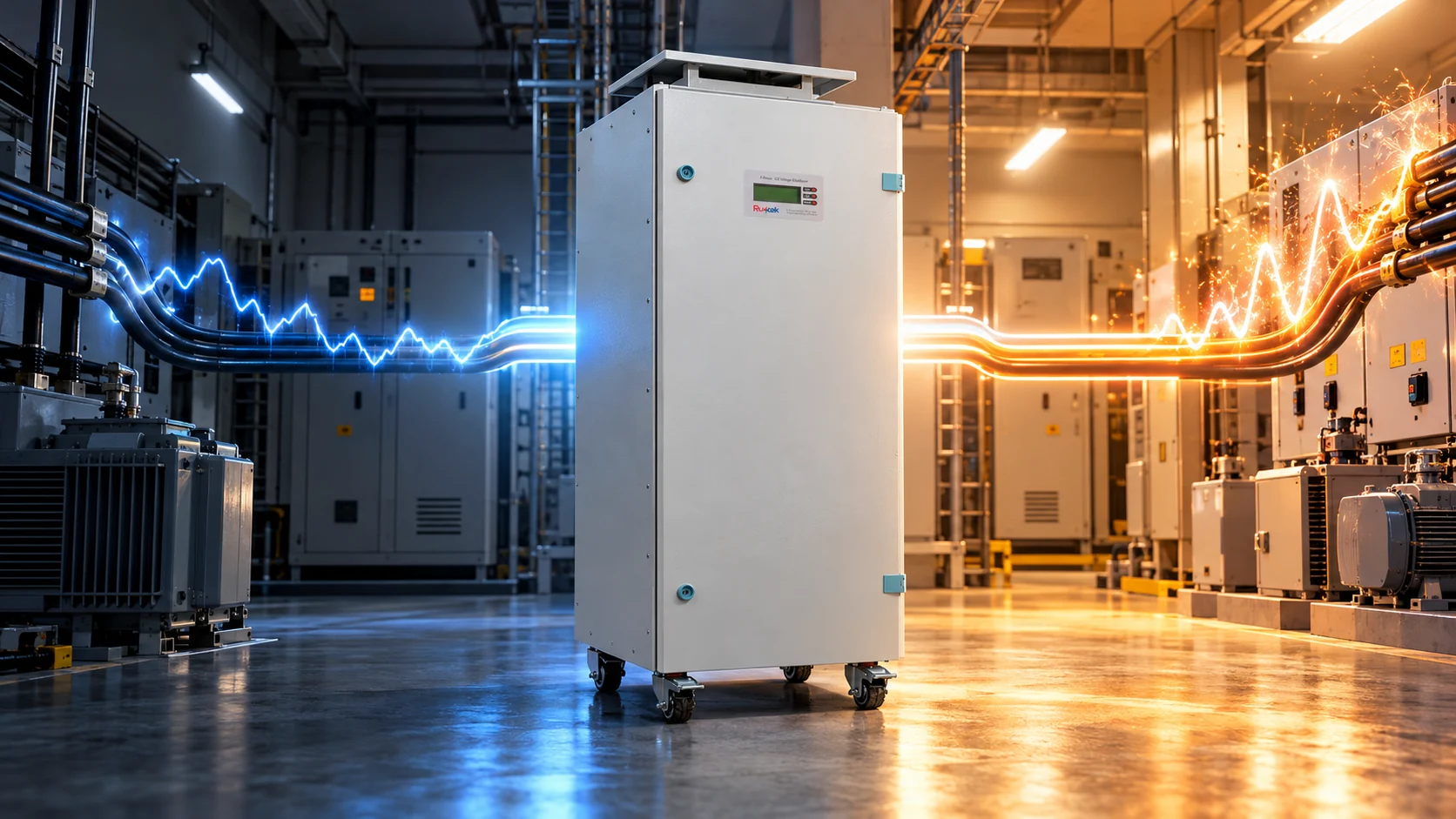
A refrigerator struggles to start, lights become dimmer in the evening, or an electronic device suddenly restarts. These problems can have the same cause: the supply voltage is not remaining within a suitable range.
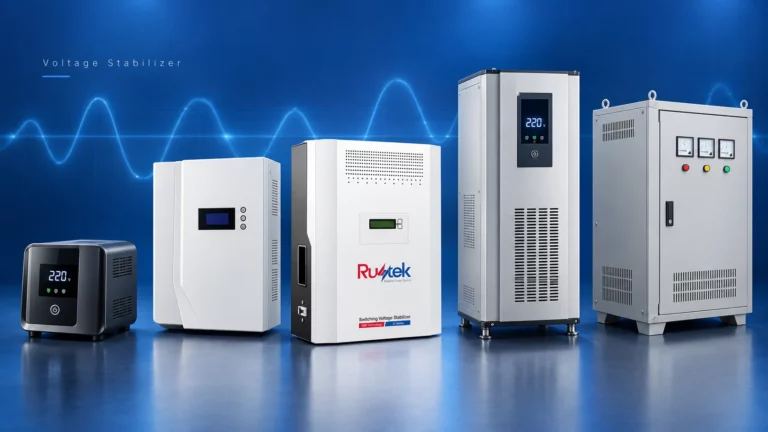
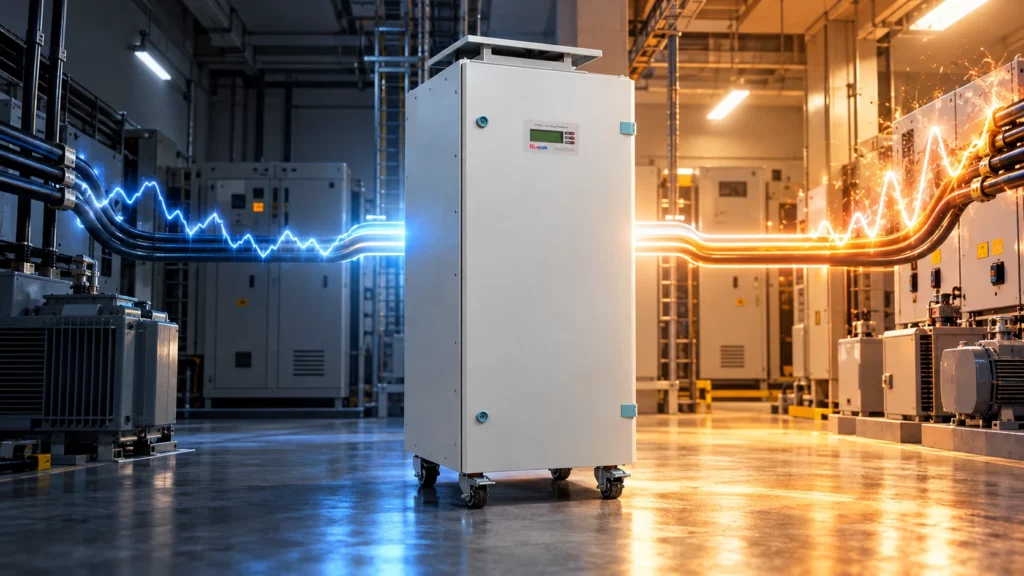
A voltage stabilizer is designed to correct this problem. It raises voltage when the incoming supply is too low and reduces it when the supply becomes too high. The goal is to keep the output within a suitable range for connected equipment.
This correction happens automatically, but the result depends on the stabilizer's input range, capacity, response time, and protection settings. It is therefore important to understand what the device can—and cannot—correct.
Why Does Electrical Voltage Become Too Low or Too High?
Electricity supplied to a building is not perfectly constant. Small variations are normal, and most equipment tolerates them. Problems begin when the voltage moves outside the equipment's acceptable operating limits.
Undervoltage may result from an overloaded distribution network, long cable runs, inadequate wiring, loose connections, or large equipment drawing substantial current during startup.
Overvoltage can be caused by distribution-system conditions, incorrect transformer settings, sudden changes in electrical demand, neutral faults, or problems within the installation.
Duration also matters. A voltage sag is a short reduction, while sustained undervoltage lasts longer. Similarly, a voltage swell is different from prolonged overvoltage. The required response depends on both the magnitude and duration of the disturbance.
How Does a Voltage Stabilizer Work?
An automatic voltage regulator continuously measures the incoming supply and adjusts its output when correction is required. Most AC stabilizers perform two basic operations:
- Boost: increasing the output when the incoming voltage is too low.
- Buck: reducing the output when the incoming voltage is too high.
A control system determines the required correction. Depending on the design, the stabilizer may switch transformer taps, move an electromechanical contact, or control electronic power components. The technology affects response time, output accuracy, cost, and maintenance requirements.
A stabilizer works with the electricity available from the network. It does not create energy and cannot provide unlimited power.
What Happens When the Voltage Drops?
Consider equipment designed for 230 V when the incoming voltage falls to 185 V. Without regulation, the equipment receives the reduced voltage. A compatible stabilizer detects the drop and activates its boost function, raising the output toward the configured level.
If the measured input remains within the model's operating range and the connected load is within capacity, the stabilizer can maintain an acceptable output without disconnecting the equipment.
This is particularly important for motor-driven appliances. Refrigerators, air conditioners, pumps, and industrial machines may struggle to produce starting torque at low voltage. Some motors draw additional current under load, which increases heating. Electronic power supplies may continue operating across a broad range, or they may shut down and restart when the input becomes insufficient.
What Happens When the Voltage Becomes Too High?
Now consider a 230 V system receiving 255 V. If this exceeds the equipment's permitted range, prolonged exposure can increase heat and stress insulation, capacitors, power supplies, and other components.
The stabilizer activates its buck function and reduces the elevated input toward the selected operating level. A correctly specified regulator may bring 255 V closer to 230 V, subject to its output tolerance and operating limits.
What Happens Beyond the Stabilizer's Operating Limits?
Every stabilizer has a defined input range. For example, one model may regulate between 165 and 255 V. These figures are illustrative; real limits vary by product.
If the input falls below the minimum or rises above the maximum, the stabilizer may be unable to maintain its rated output. Depending on the design, protection may disconnect the load, issue a fault, or permit operation with reduced accuracy.
The regulation range and protective cut-off thresholds are separate specifications. A stabilizer should not be expected to maintain normal output under every possible supply condition.
Which Electrical Problems Can a Stabilizer Correct?
| Electrical problem | What a stabilizer can do |
|---|---|
| Sustained low voltage | Boost voltage within its rated range |
| Sustained high voltage | Reduce voltage within its rated range |
| Repeated fluctuations | Automatically regulate changes within its response capability |
| Very short spikes | Separate surge protection may be required |
| Complete outage | Cannot supply electricity without backup power |
Response time matters when voltage changes rapidly. A device intended for gradual fluctuations may not correct a very short sag before sensitive equipment shuts down. A stabilizer is also not a replacement for a UPS, which stores energy and can temporarily power equipment during an outage.
How to Choose Protection for Low and High Voltage
Before purchasing, compare these specifications:
- Input-voltage range: it must cover the lowest and highest voltage measured at the site.
- Output accuracy: the regulated output must suit the connected equipment.
- Capacity and starting current: motors and compressors may need substantially more current during startup.
- Technology and response time: match the regulation method to the speed of the disturbance.
- Built-in protection: check cut-off thresholds, overload protection, thermal protection, and restart delay.
For broader selection guidance, read how to choose a voltage stabilizer.
Stable Voltage Starts with Understanding the Supply
A stabilizer can correct low and high voltage only within its specified operating limits. The right choice starts with measurements, not assumptions. Record the voltage during normal operation and peak demand, identify the connected loads, and check starting currents.
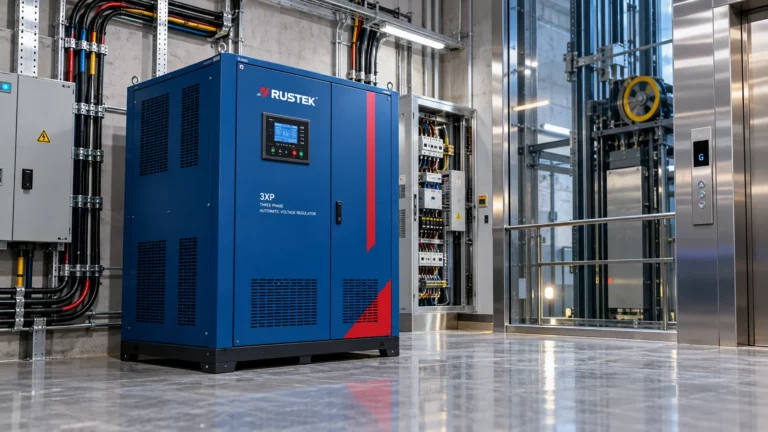
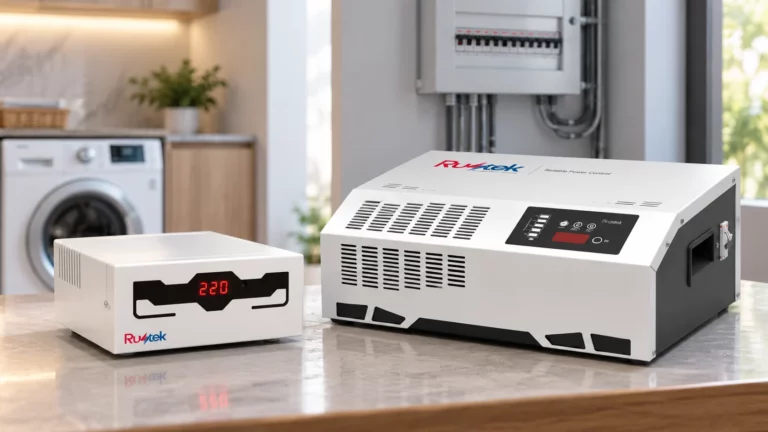
Rustek offers automatic voltage regulators for appliance-level, whole-home, commercial, and industrial applications. See the voltage fluctuation protection guide for a practical route from symptoms to an appropriate solution.
Frequently Asked Questions
Does a stabilizer always provide exactly 230 V?
No. Output varies within the accuracy specified for the model. The aim is to maintain an acceptable range, not a mathematically exact value under every condition.
Can a stabilizer correct a complete power outage?
No. It needs an incoming supply. A UPS, battery system, or generator is required for backup power.
Is a surge protector the same as a voltage stabilizer?
No. A stabilizer corrects eligible sustained voltage deviations. Surge protection is designed for short transient events. Some products combine functions, but their specifications must be checked.