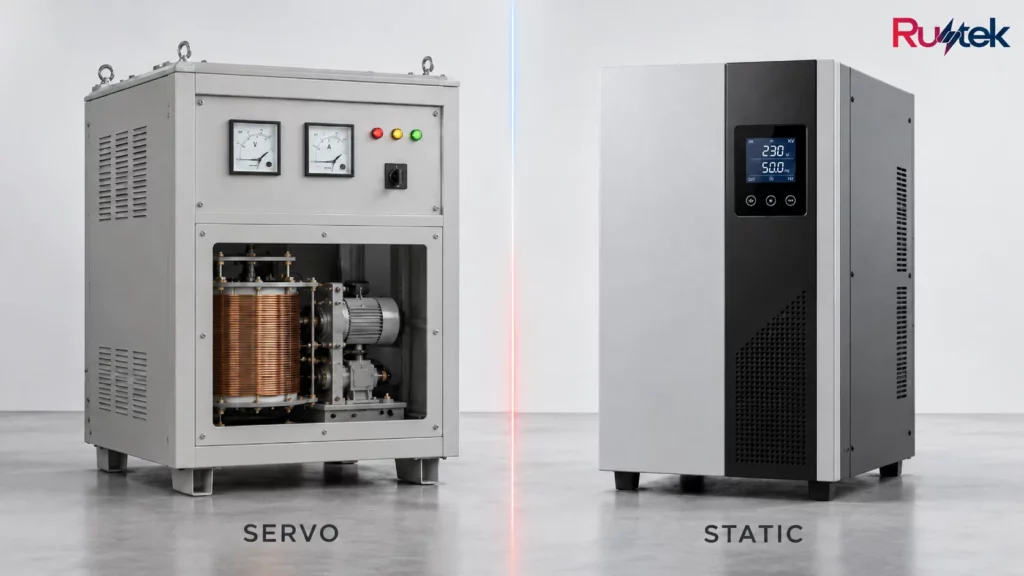
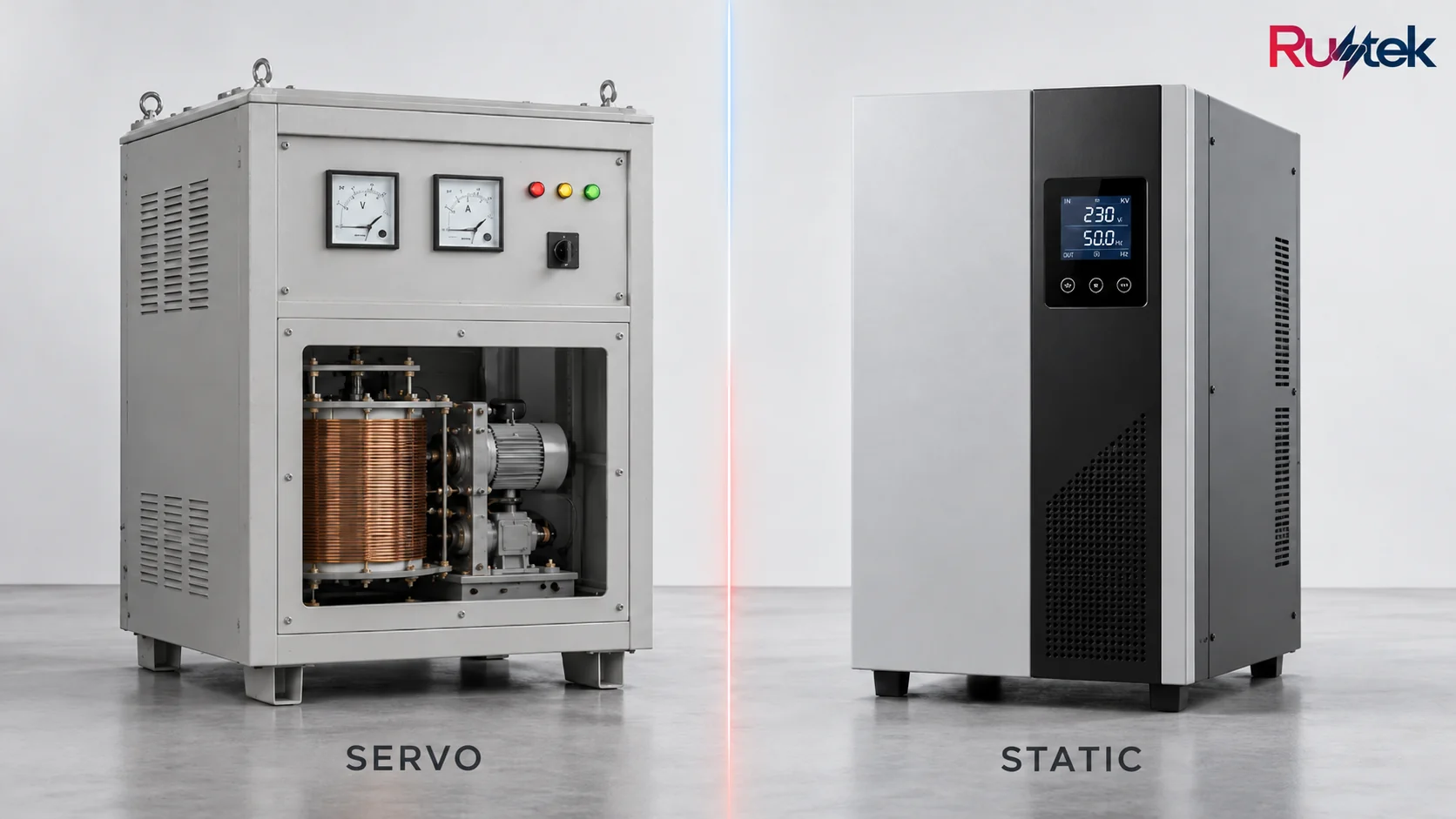
A servo voltage stabilizer and a static voltage stabilizer solve the same basic problem: they supply electrical equipment with more consistent voltage and reduce the effect of fluctuations. The main difference is how they produce that correction.
Servo stabilizers use a motor-driven electromechanical mechanism to adjust voltage continuously. Static stabilizers use electronic switching, allowing them to respond without waiting for mechanical movement.
IGBT-based static stabilizers generally have an advantage when rapid correction and minimal mechanical maintenance are important. Servo models remain a practical choice for applications where voltage changes more gradually and initial cost is a priority.
Understanding these differences helps you choose the technology that genuinely suits your equipment.
How Does a Servo Voltage Stabilizer Work?
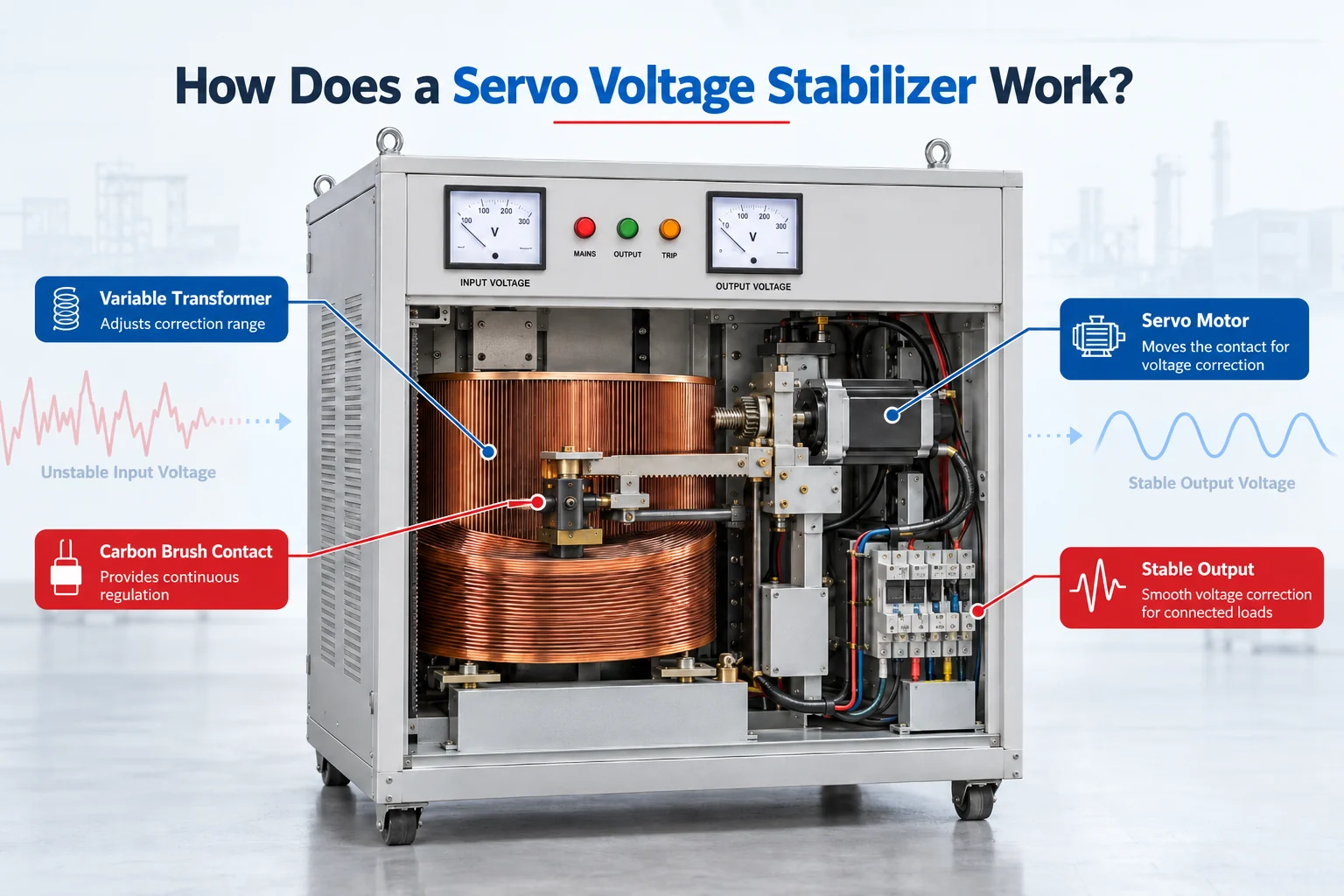
A servo voltage stabilizer uses an electromechanical regulation system built around a variable transformer, a servo motor, and a control circuit.
When the input voltage rises or falls, the controller detects the deviation and commands the motor to move a contact along the transformer winding. This changes the corrective voltage until the output returns toward its target.
Because the adjustment is continuous rather than divided into fixed steps, a well-designed servo stabilizer can provide excellent steady-state voltage accuracy. Servo technology is widely used in workshops, factories, commercial installations, and other environments with varying electrical loads.
Its main strength is accurate voltage regulation based on an established technology with serviceable mechanical components. However, that mechanical construction also introduces limitations.
Slower Correction During Sudden Voltage Changes
A servo motor needs time to reposition its contact. Small corrections may happen relatively quickly, but larger voltage deviations require more movement. Correction speed therefore depends on the motor, the control system, and the size of the voltage change.
For equipment exposed to abrupt fluctuations, that delay can matter. A sensitive controller or specialized device may shut down before the regulator completes its adjustment.
Mechanical Wear and Maintenance
Servo stabilizers contain parts that move whenever voltage correction is required. Carbon brushes, contact surfaces, gears, and motor assemblies may require inspection or replacement over time. The maintenance interval depends on the operating environment and how frequently regulation occurs.
Noise and Installation Considerations
Motor movement can produce audible sound during regulation. Servo systems may also require additional space for their mechanical assemblies.
How Does a Static Voltage Stabilizer Work?
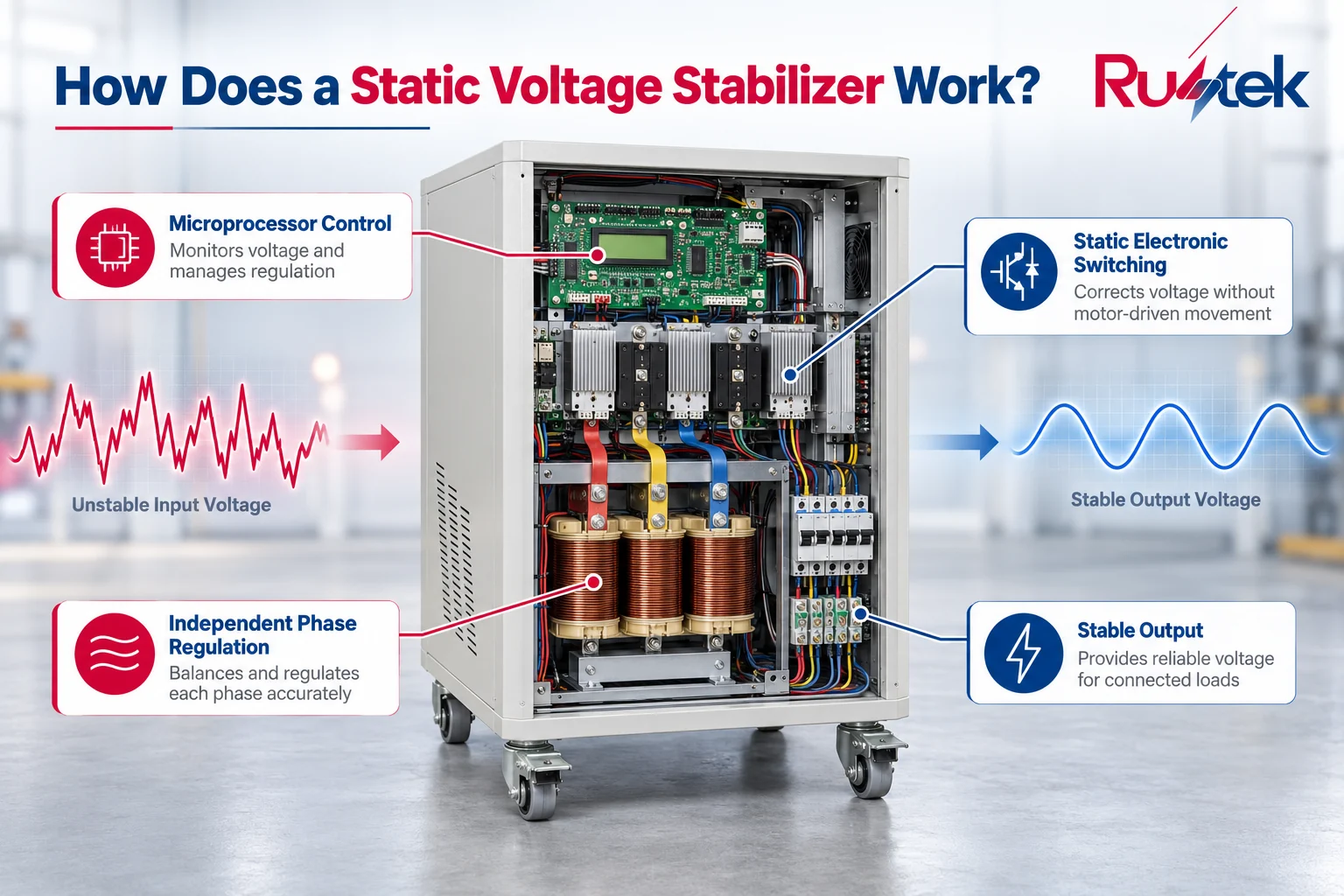
A static voltage stabilizer replaces motor-driven regulation with electronic control.
In an IGBT-based design, electronic circuitry monitors the voltage and controls power semiconductor switches to produce the required correction. The exact circuit arrangement varies: some systems inject a compensating voltage, while others use different semiconductor-based regulation methods.
The key distinction from a servo stabilizer is the absence of a motorized voltage-adjustment mechanism. Electronic correction is therefore not delayed by the physical movement of a contact.
Static stabilizers are especially suitable for installations with rapid load changes, sensitive electronics, medical equipment, cryptocurrency miners, telecommunications systems, and demanding industrial applications. They also avoid the brush wear associated with servo regulation.
Servo vs. Static Voltage Stabilizers: Key Differences
| Feature | Servo stabilizer | Static stabilizer |
|---|---|---|
| Regulation method | Motor-driven transformer adjustment | Electronic switching |
| Correction speed | Limited by mechanical movement | Generally faster |
| Voltage accuracy | High, continuous regulation | Very high, model-dependent |
| Moving regulation parts | Motor and contact mechanism | None |
| Maintenance focus | Brushes and mechanical parts | Cooling and electronics |
| Initial cost | Often more economical | Often higher |
| Best suited for | Gradual fluctuations and conventional loads | Rapid changes and sensitive equipment |
The important distinction is between response time and output accuracy. A servo stabilizer can produce accurate voltage after completing its adjustment, while a static stabilizer may reach the required output much sooner.
Neither characteristic should be judged from the technology name alone. Manufacturer specifications, input-voltage range, output accuracy, and load compatibility remain essential.
Why Does Voltage Regulation Speed Matter?
Consider equipment operating on a nominal 230 V supply. If voltage gradually falls to 205 V, both a correctly specified servo stabilizer and a static stabilizer may successfully correct it.
If the same drop happens abruptly when a large motor starts nearby, the static regulator can potentially restore the output much faster, reducing the time during which connected equipment experiences the disturbance.
According to an IEEE resource on voltage sags, some sensitive equipment can shut down when voltage falls below 90% of nominal for only one or two AC cycles—approximately 20 to 40 milliseconds on a 50 Hz supply.
This illustrates why correction speed matters: even a brief delay can interrupt sensitive equipment.
Rustek XI Series: Static Regulation Without Servo Motors
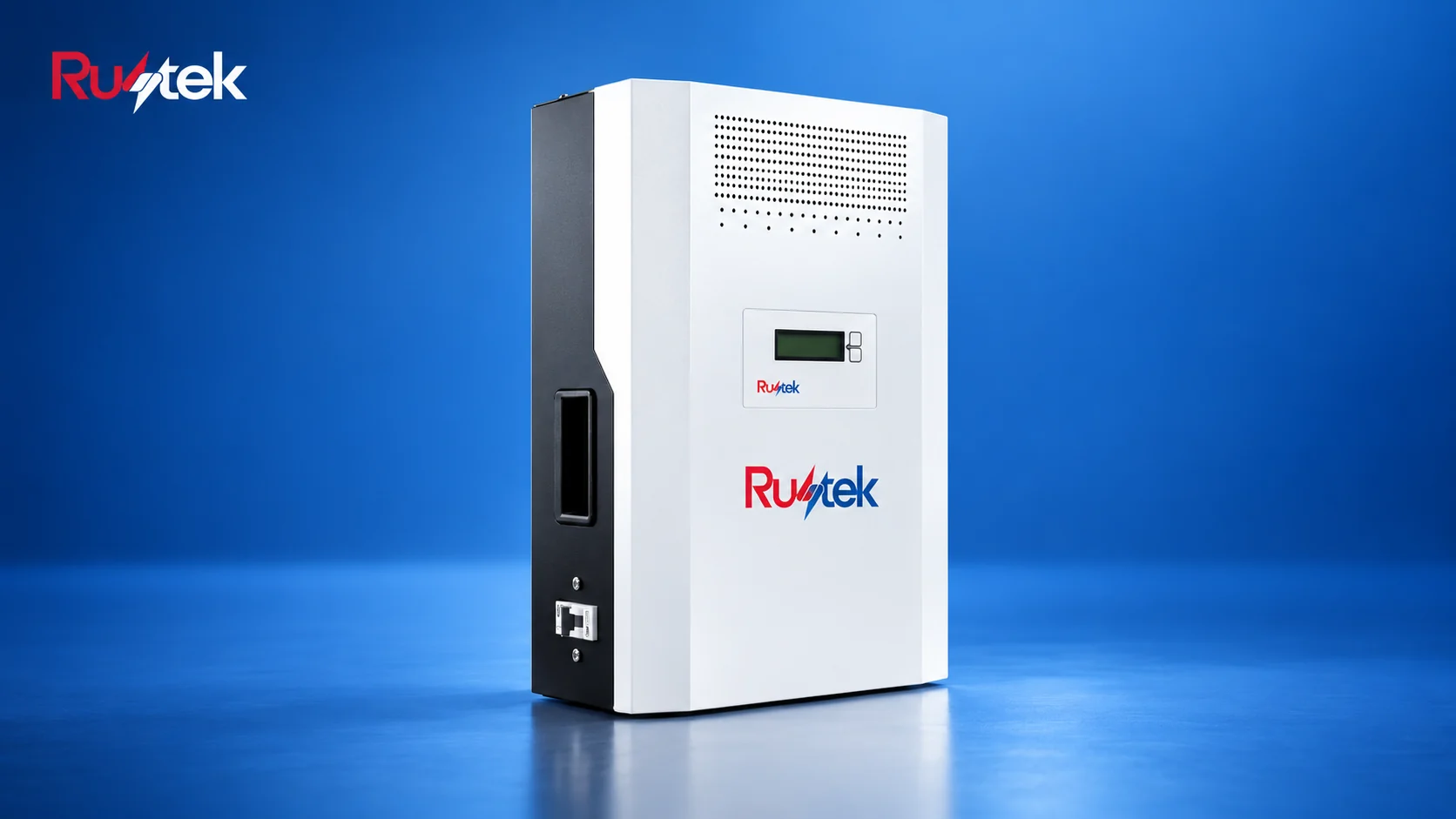
Rustek's XI Series brings digitally controlled IGBT technology to single-phase voltage stabilization. Three-phase 3XI models are also available for industrial and demanding clinical applications.
The design combines precise electronic regulation with a configurable output voltage and multiple protective functions. It is especially well suited to voltage-sensitive applications that need fast correction, including ASIC miners.
The series is available in capacities starting from 8 kVA. Explore Rustek's static voltage stabilizers for model specifications and protection features.
Which Technology Should You Choose?
A servo stabilizer may be sufficient for conventional machinery, workshops, or facilities where voltage changes gradually and routine maintenance is acceptable.
Static technology becomes more attractive when fast regulation, low mechanical wear, and consistent operation under rapidly changing electrical conditions are important.
For ordinary household appliances, neither technology is automatically necessary. Economical relay-based stabilizers can provide suitable stepwise regulation when their accuracy and capacity meet the appliance specifications. Rustek offers relay-based automatic voltage regulators for both single-phase and three-phase applications.
Frequently Asked Questions
Which is better, a servo or static voltage stabilizer?
Static stabilizers generally provide faster electronic correction without motor-driven regulation parts. Servo stabilizers can provide accurate continuous correction at a potentially lower initial cost. The better choice depends on the equipment and operating conditions.
Is a static stabilizer completely maintenance-free?
No. Although it has no moving voltage-adjustment mechanism, its electronic components, cooling fans, connections, and ventilation still require appropriate inspection.
Can a static stabilizer protect equipment during a power outage?
No. Voltage stabilization requires an available input supply. Backup operation requires a suitable UPS or another power source.