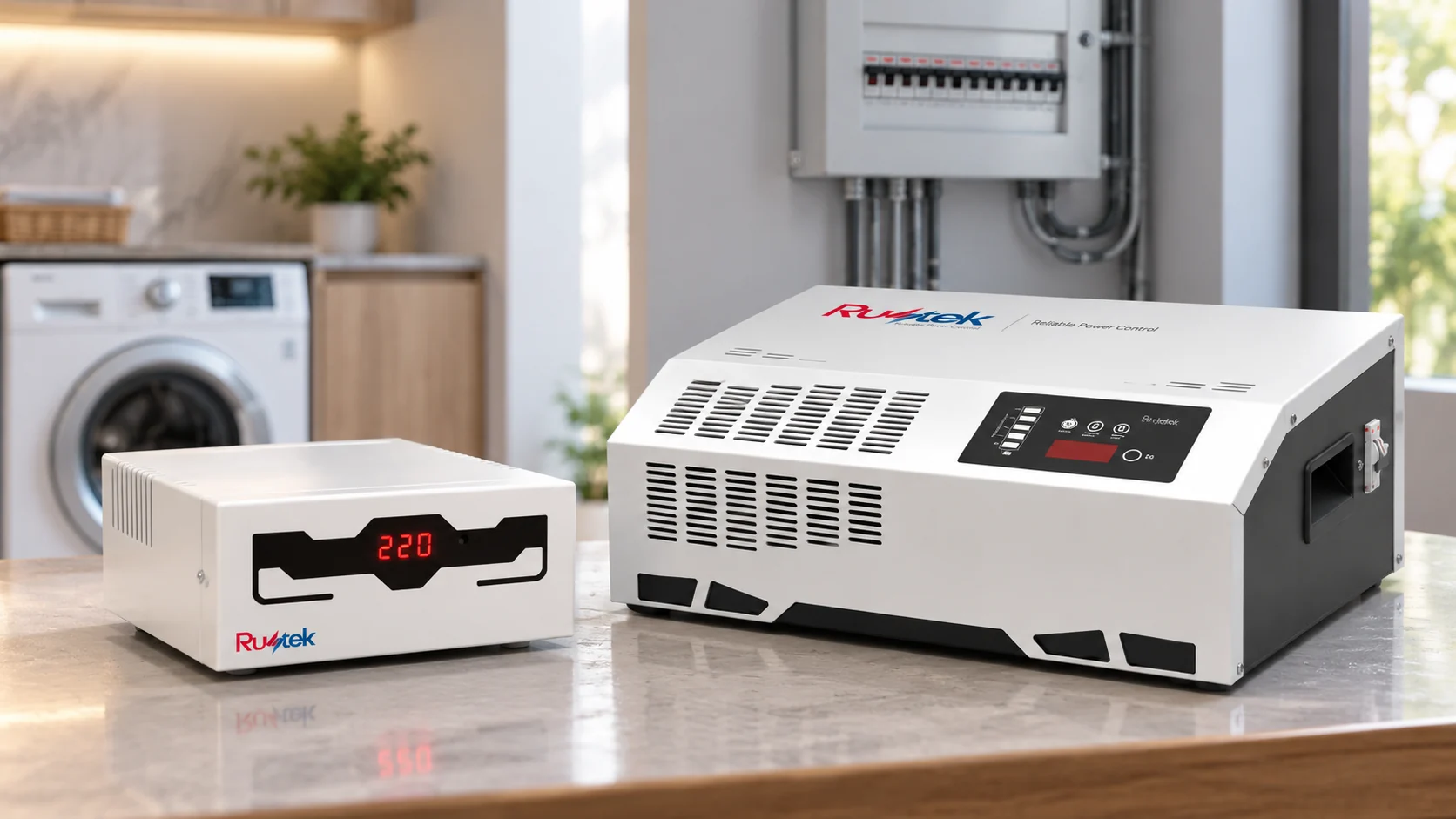
Your refrigerator struggles to start when neighborhood electricity demand peaks. The air conditioner occasionally shuts down, and the lights sometimes become noticeably dimmer. You suspect unstable voltage, but does every appliance in the house need protection? Not necessarily.
You have two main options: install a dedicated voltage stabilizer for individual appliances or use a larger whole-house stabilizer to regulate several electrical circuits from one location. Both approaches can work well. The better choice depends on which appliances are affected, how much power they require, and how widely the voltage problem extends through your home.
Whole-House vs. Single-Appliance Stabilizers: What's the Difference?
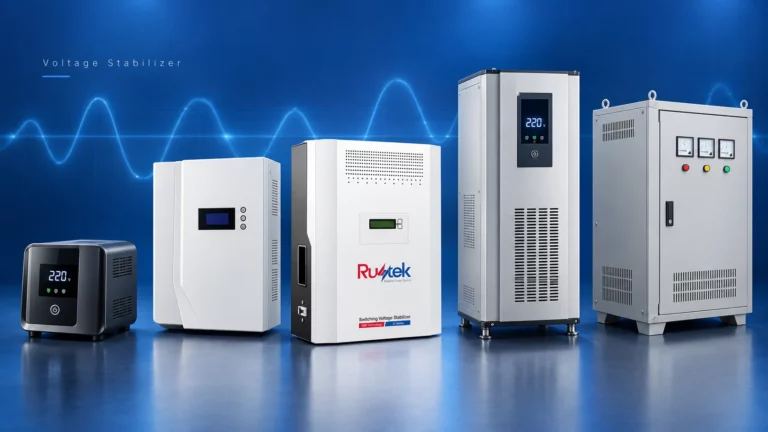
A single-appliance stabilizer connects to one electrical device, such as a refrigerator, television, washing machine, air conditioner, or wall-mounted boiler. It monitors the incoming supply and corrects fluctuations before delivering power to that appliance.
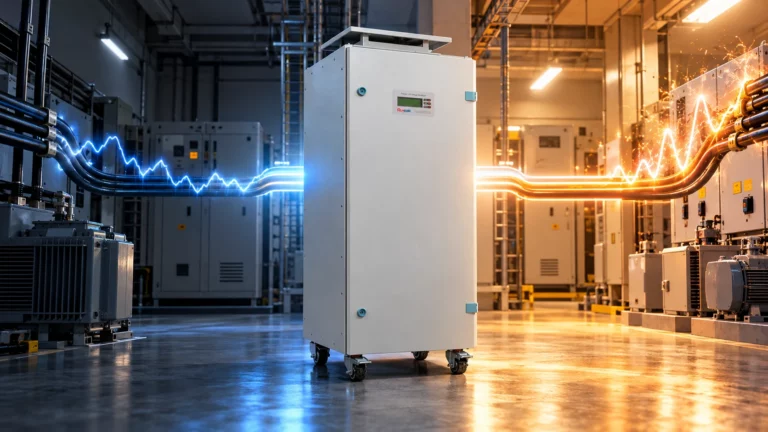
A whole-house stabilizer works on the same principle but handles a much larger load. Installed at an appropriate point in the property's distribution system, it regulates voltage for the circuits connected downstream.
| Factor | Single-appliance stabilizer | Whole-house stabilizer |
|---|---|---|
| Coverage | One or two appliances | Multiple household circuits |
| Capacity | Lower, matched to specific equipment | Higher, based on combined demand |
| Installation | Often plug-in | Requires professional electrical installation |
| Initial investment | Generally lower | Generally higher |
| Flexibility | Easy to relocate or replace | Centralized, permanent arrangement |
| Best suited for | Isolated appliances or limited protection needs | Widespread voltage problems |
Neither approach is automatically better at regulating voltage. Performance depends on the stabilizer's actual specifications, not only on where it is installed. If frequent undervoltage or overvoltage affects many devices, a whole-house system may be the more suitable and economical long-term investment. You can also read Rustek's home voltage stabilizer buying guide.
When Is a Single-Appliance Stabilizer Enough?
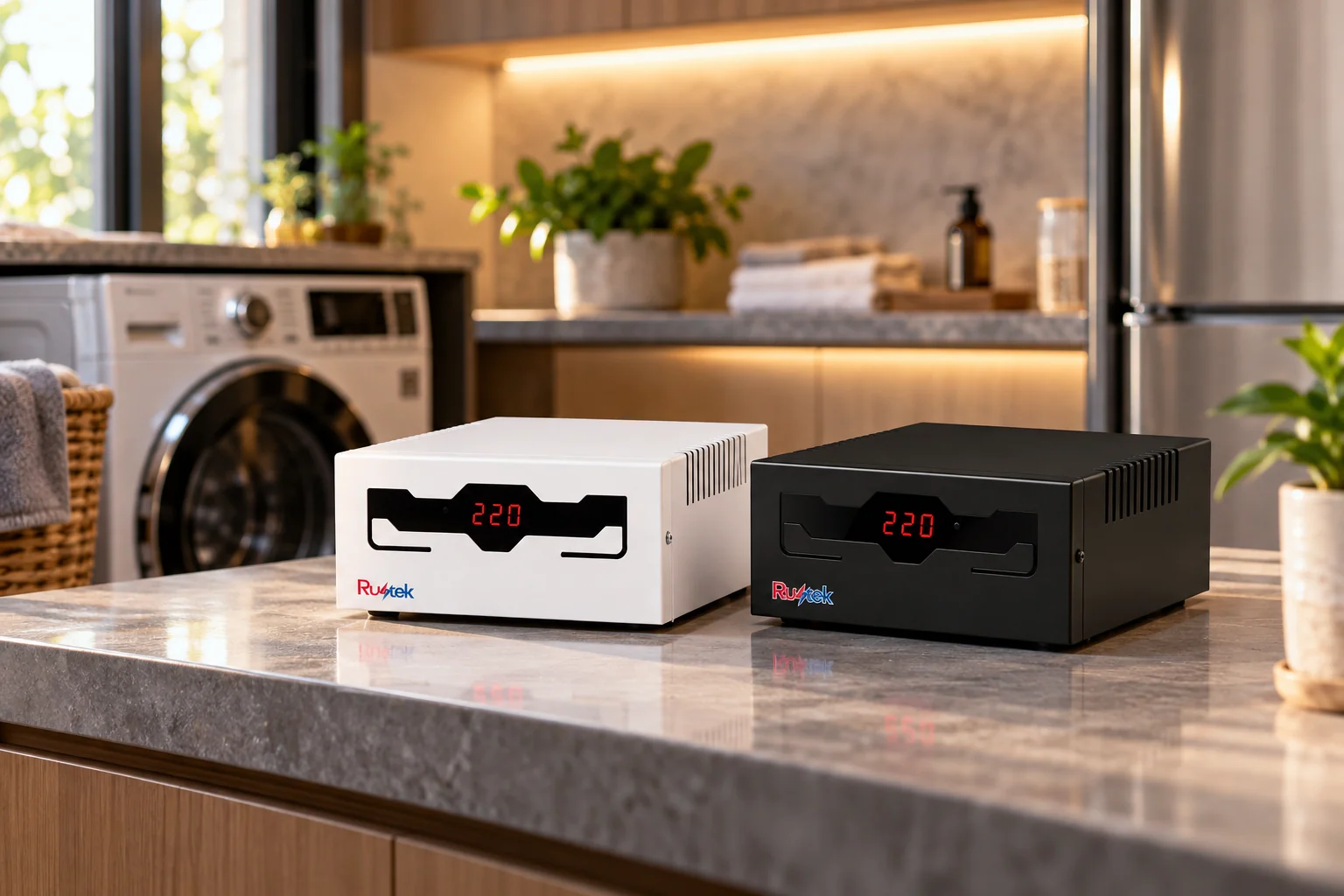
Suppose your home generally has a reliable electrical supply, but an older refrigerator repeatedly struggles during evening voltage drops. Buying a large stabilizer for the entire property would probably be unnecessary if the rest of the equipment operates within its rated limits.
A dedicated stabilizer protects the equipment that needs it without requiring changes to the home's electrical distribution. This approach makes sense when:
- Only one or two appliances need voltage regulation.
- You live in a rented property and prefer portable equipment.
- Your budget does not justify a centralized installation.
- Some appliances have different voltage or restart-delay requirements.
Refrigerators and air conditioners deserve particular attention because their compressors can draw considerably more current during startup than during normal operation. The stabilizer must accommodate those starting conditions, not only the running wattage printed on the appliance label.
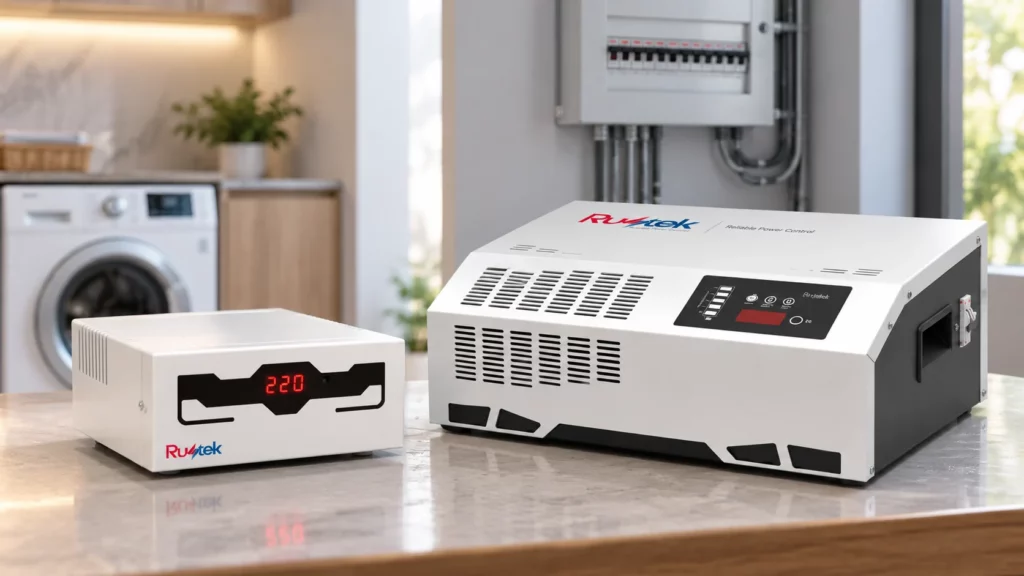
For this purpose, Rustek offers ECO Appliance Voltage Stabilizers in 1000, 2000, and 3000 VA capacities. These models provide digital monitoring, adjustable restart delays, and an input operating range of 155–265 V. The correct model still depends on the appliance specifications and measured supply conditions.
When Should You Choose a Whole-House Voltage Stabilizer?
Consider a different situation: the refrigerator, washing machine, water pump, and television all experience problems whenever neighborhood voltage drops or rises. Installing a separate unit for every device could become expensive and inconvenient.
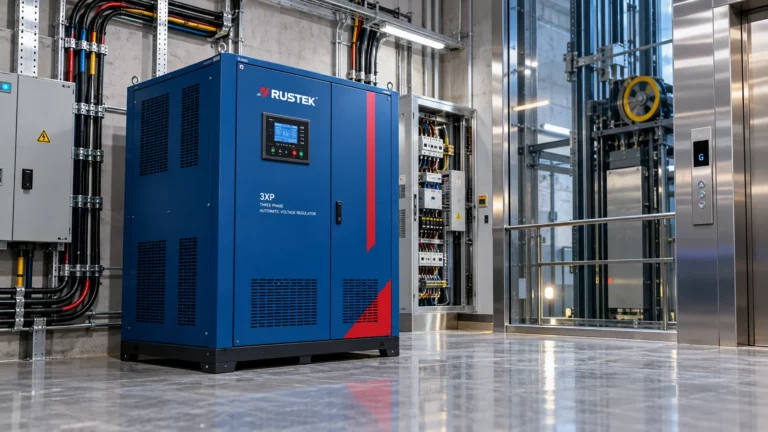
A centralized automatic voltage regulator can protect several circuits through one correctly sized system. Whole-house stabilization becomes especially attractive when:
- Voltage fluctuations affect several rooms or electrical circuits.
- Multiple appliances need protection at the same time.
- You are building or renovating a property.
- You prefer centralized electrical protection.
It can also simplify future equipment additions, provided the stabilizer has sufficient spare capacity.
Rustek's Home Voltage Stabilizers include ECO automatic voltage regulators in 6000, 8000, 12000, 15000, and 20000 VA models. These single-phase regulators provide automatic voltage adjustment, digital monitoring, a configurable power-up delay, automatic and bypass modes, and a full set of protections.
Why Relay-Based Stabilizers Make Sense for Most Homes
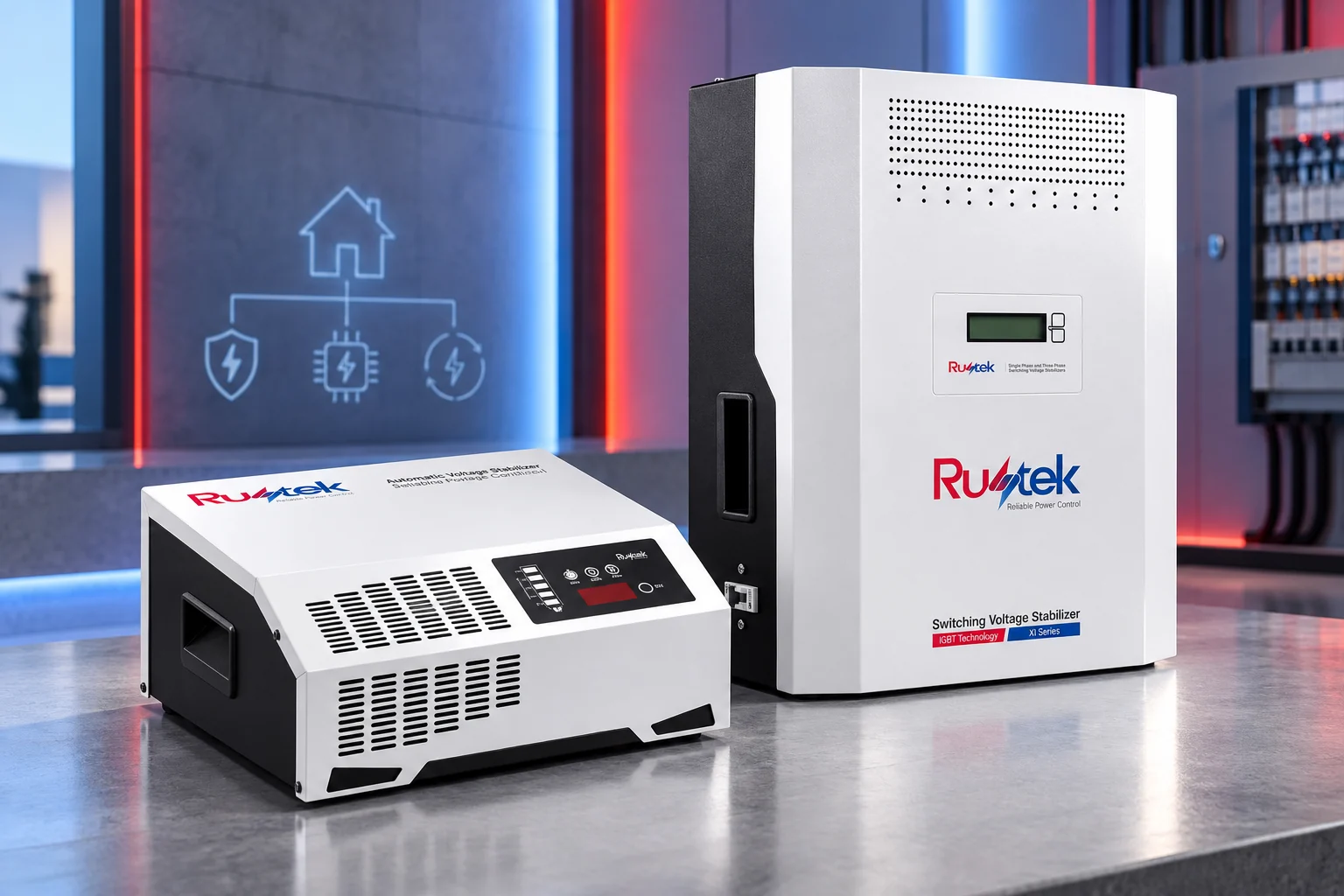
When comparing residential stabilizers, you will encounter relay-based, servo-controlled, and static electronic technologies. A more expensive technology is not automatically better for ordinary household requirements.
Relay-based stabilizers provide a practical balance of performance, simplicity, and cost. They switch between transformer taps to raise or lower voltage. Regulation happens in defined steps rather than through continuous mechanical adjustment.
This approach offers several advantages:
- Relay-based designs are generally more affordable than servo or advanced static systems of comparable capacity.
- They can respond quickly without a motor-driven adjustment mechanism.
- Their relatively straightforward construction can make maintenance and component replacement easier.
Most household appliances do not need the supply to remain at exactly 220 or 230 V every second. They are designed to operate within a specified acceptable range. For these applications, the stepwise regulation of a correctly selected relay stabilizer is often fully sufficient.
Rustek's ECO residential range follows this practical approach, prioritizing reliable automatic regulation and affordability. If you have unusually sensitive precision equipment at home, the IGBT-based Rustek XI Series may be a better fit.
Relay stabilizers are not ideal for every application. Switching can produce audible clicks, and output changes occur in steps. Laboratory, medical, or other precision equipment may justify a different technology. The important question is not which technology is most advanced, but whether it offers a meaningful advantage for your actual equipment.
How Much Stabilizer Capacity Does Your Home Need?
Capacity is where many buyers make an expensive mistake. Stabilizer capacity is normally expressed in volt-amperes (VA) or kilovolt-amperes (kVA), while appliance power is usually shown in watts. These values are not always interchangeable because apparent power depends on power factor.
For a single-phase electrical system, a basic estimate is:
VA = Voltage × Current
For example, a combined load drawing 20 A at 230 V represents approximately 4600 VA. This is only a starting point. A proper calculation must also consider motor starting current, simultaneous operation, minimum input voltage, and the stabilizer's overload capability.
A home with several air conditioners and a water pump may need significantly more capacity than one containing mostly lighting and electronics. Equally, there is no reason to buy a 20 kVA stabilizer simply because the house is large.
Before selecting a model, list the appliances you want to protect and identify how many may operate at the same time. For a detailed calculation, see Rustek's Whole-Home Voltage Stabilizer Sizing Guide. Do not overlook the required input-voltage range.
Which Option Should You Buy?
If unstable voltage affects only one valuable appliance, begin with a dedicated stabilizer. It is focused, affordable, and usually straightforward to install.
If fluctuations affect several circuits throughout the property, a correctly sized whole-house regulator will often be the more convenient long-term solution.
If you are still uncertain, do not start with a capacity or a price. Begin with three facts: the measured voltage range, the appliances you need to protect, and their actual electrical demand. Then contact Rustek for help selecting the right stabilizer.
Frequently Asked Questions
Is one whole-house stabilizer cheaper than several individual units?
It depends on the number of appliances, their demand, equipment prices, and installation costs. One or two dedicated units often cost less initially. Centralized regulation may become more economical when many circuits need protection.
Can I use one stabilizer for a refrigerator and a television?
Potentially, yes. Both can share a suitably rated stabilizer if their combined running and starting demands, outlet arrangement, and manufacturer requirements permit it.
Does a whole-house stabilizer reduce electricity bills?
Not necessarily. Its primary function is voltage regulation, not guaranteed energy savings. Any effect on consumption depends on the connected loads and operating conditions.
Can a whole-house voltage regulator provide electricity during a power outage?
No. A standalone voltage stabilizer does not store electricity. Continued operation during an outage requires a suitable UPS or backup power system.